Every day, students experience various learning activities: completing assignments, discussing with peers, working on projects, and receiving feedback from teachers. Yet amid this busy schedule, one thing often gets overlooked. The opportunity to pause and understand what they are actually learning from these experiences.
Many learning processes end the moment an assignment is submitted or a grade is given. Students know what they did, but may not fully understand how they developed during the process. As a result, valuable learning passes by without ever being truly recognized.
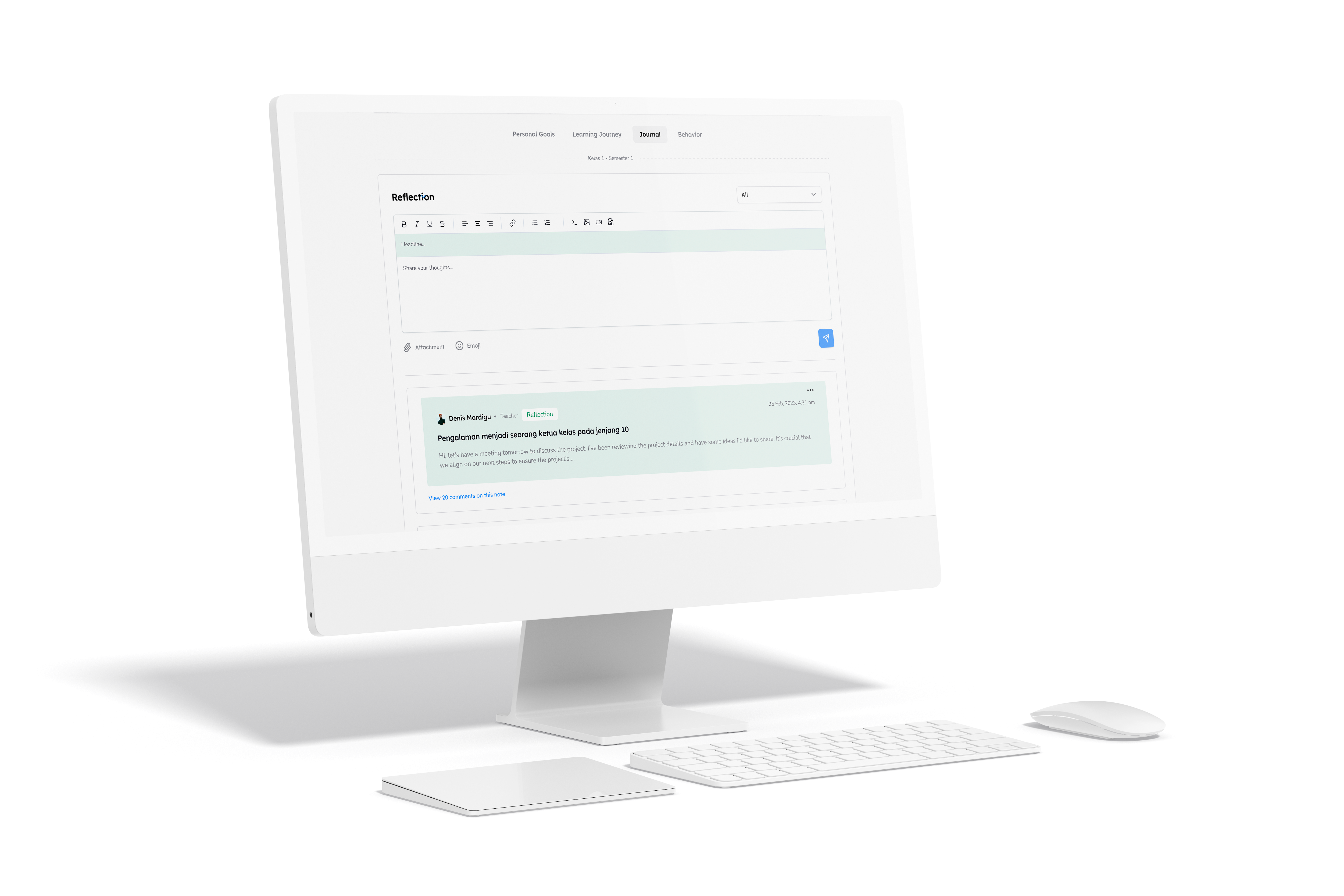
This is where the Journal feature in Guru Kreator’s Student Portfolio plays an important role. It is not simply a place to record learning activities, but a space for students to document their thoughts, reflections, and learning throughout their learning journey.
Why Does Reflection Matter for Students?
Reflection is often seen as an additional activity done after the learning process is complete. Yet this contemplation is actually at the core of learning itself.
When students reflect, they do not just ask “What did I do?” They begin to ask deeper questions:
- What did I learn from this experience?
- What challenges did I face?
- Which strategies worked for me?
- What do I want to do better in the future?
What does reflection like this look like in practice? A student initially wrote a simple goal: “I want to be more confident when presenting.” After two weeks of reviewing their goal in the Student Portfolio, the student wrote in their personal reflection:
“It turns out I don’t just need confidence. I need better preparation before presenting. Next week I want to practice with my parents so I can present smoothly.”
This change shows what happens when students have space to reflect: they do not just chase targets, but begin to understand what strategies they need to achieve them.
These simple questions help students build metacognition—awareness of how they themselves think and learn. This ability becomes an important foundation for student agency: when students understand their own learning process, they are more ready to take an active role in determining the direction of their development.
When Learning Experiences Disappear
A group project may teach collaboration. A presentation may build confidence. A mistake in an assignment may provide a lesson more valuable than the grade itself. Unfortunately, these moments are rarely documented.
After an activity ends, the class moves on to the next topic. Teachers see the final result, parents see the grade, but the thinking process, challenges, and development that students experienced often remain invisible. Schools miss the opportunity to understand students’ learning journeys more fully.
Capturing How Students Think and Grow
The Journal feature is designed to help students document their reflections continuously. Through the journal, students can record things they consider important in their learning process: new understandings gained, challenges being faced, memorable experiences, learning strategies that worked, and areas they want to improve.
There is no rigid format. Each student has a different way of making sense of their learning experience, and this approach provides space to build a more personal relationship with their own learning process.
Over time, the journal becomes a record of development that shows how a student’s thinking changes and grows—not just what they achieved, but how they got to those achievements.
From Reflection to More Personal Mentoring
Teachers often see the results of student work without knowing the process behind it. A grade may show certain achievement, but it may not explain how students arrived at that result.
Through the journal, teachers gain richer context: the challenges students are facing, areas that need additional support, and shifts in thinking that are occurring. Conversations between teacher and student no longer focus only on the final outcome, but on the growth process happening in real time. Teachers can take on the role of mentors who help students see their development more clearly.
The Journal as Part of a Complete Student Portfolio
The journal does not stand alone. Because it is integrated within the Student Portfolio, the journal becomes one layer that makes the portfolio truly reflect a student’s overall development.
An effective Student Portfolio does not just show what students have achieved, but how those achievements came to be. The journal created by students can be viewed by teachers, parents, school administrators, and the students themselves. This transparency builds shared understanding of students’ learning journeys. Even in Student-Led Conferences, the journal becomes incredibly valuable reflection material because students can explain the process, not just present results.
Reflection captured in the Journal also forms a strong foundation for two other portfolio features. Personal Goals helps students set and revisit learning goals they genuinely own. Learning Journey allows students to see their learning progress as one connected, coherent story. Together, the three features work to develop students who do not just learn, but understand themselves as learners.
Building Students Who Are Reflective and Self-Directed
Strong learning does not only produce students who can answer questions correctly. It produces students who understand themselves as learners. Through a consistent reflection habit, students come to recognize their own development: the strengths they bring, the challenges worth facing, and the steps they can take to keep growing. This is where genuine student agency takes root.
The Journal in Student Portfolio by Guru Kreator helps schools build a living reflection culture. When students can reflect on what they have learned, the learning process becomes more intentional, more directed, and more meaningful.
Schedule a free demo today and see how the Journal in Student Portfolio can change the way your students engage with their own learning.