
Understanding how clear criteria help teachers assess learning more objectively
In education, assessment is often perceived as the final stage of learning—when in fact, assessment is an integral part of the learning process itself. How teachers assess greatly influences how students understand success, failure, and their own learning progress.
One assessment approach that has become increasingly relevant in modern education is Criterion-Referenced Assessment. This approach helps teachers assess students more fairly, transparently, and meaningfully—without comparing students to one another.
To support criterion-based assessment in a practical way, Guru Kreator (GK) introduces Criterion Tools—a rubric feature that is fully integrated into the assessment process.
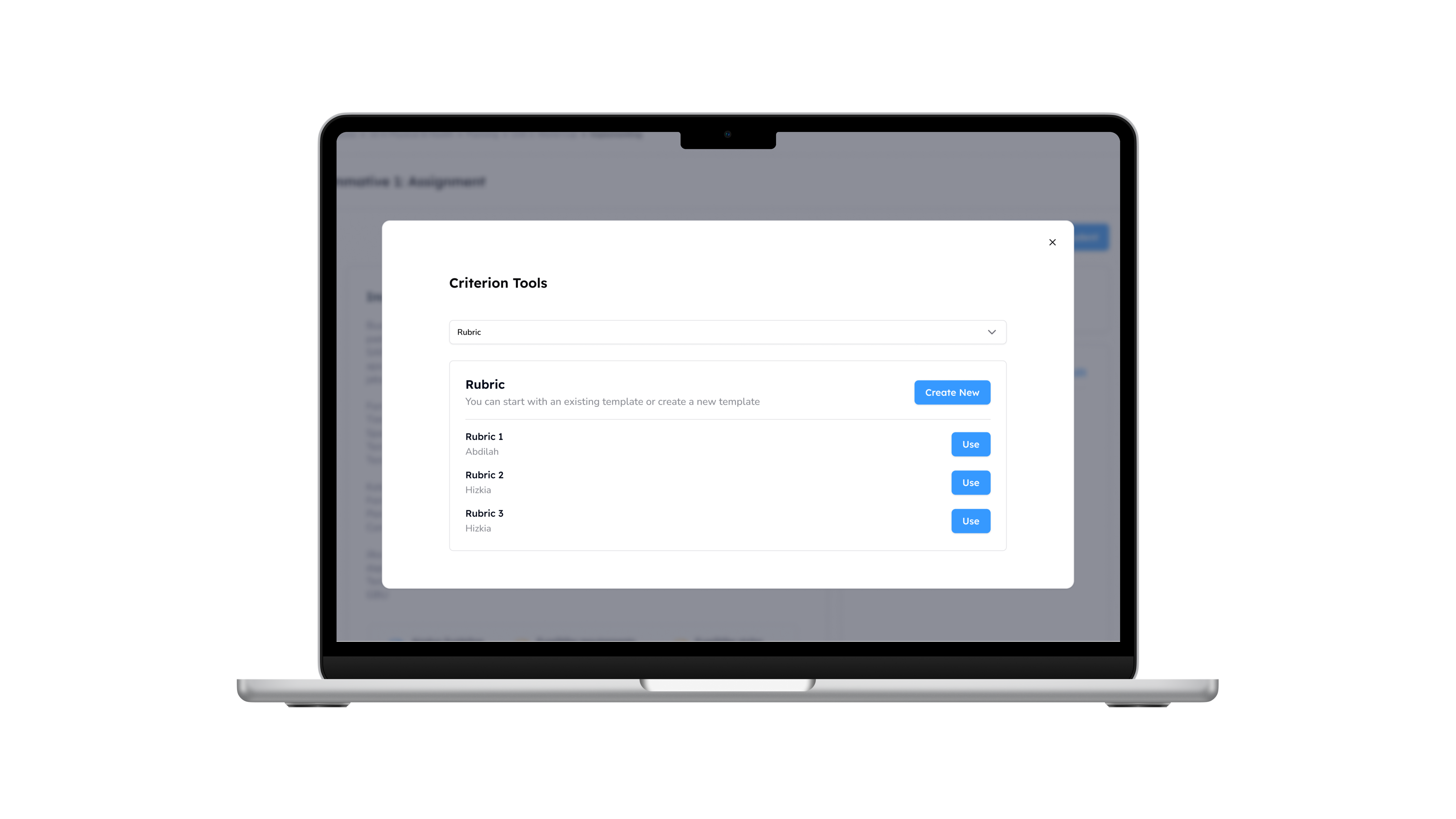
Criterion Tools as a Support for Criterion-Based Assessment
Criterion Tools is a feature in GK that enables teachers to design and use rubrics as the basis for assessment. Through this feature, teachers define clear success criteria and performance levels before the assessment takes place.
With Criterion Tools, assessment no longer relies on comparisons between students, but on how well each student meets the established criteria.
The Role of Criterion Tools in Supporting Teacher Assessment
- Clear Assessment Criteria from the Start
Teachers can define what is being assessed and how different levels of achievement are described. This helps students understand learning expectations from the very beginning. - More Objective and Consistent Assessment
With structured rubrics, teachers assess students using the same indicators. This minimizes the risk of subjectivity and inconsistency in assessment. - Supporting Diverse Levels of Student Achievement
Criterion Tools allow teachers to value students’ learning processes and progress. Students are not forced into the same stage of mastery, but are assessed according to their individual level of achievement. - Providing Meaningful Feedback
Each performance level within the rubric helps teachers deliver specific and targeted feedback. Students can clearly see their strengths as well as areas that need further development.
Applying Criterion Tools in the Assessment Process in GK
In GK, Criterion Tools are directly integrated into the assessment workflow. Teachers can:
- Design rubrics aligned with learning objectives and targeted competencies
- Define performance levels that represent students’ developmental progress
- Use rubrics when assessing student assignments or projects
- Use rubrics as a basis for discussing learning outcomes with students and parents
Through this approach, assessment does not stand alone—it becomes part of an ongoing and continuous learning process.
The Impact of Criterion Tools on Learning
The use of Criterion Tools in GK helps shift perspectives on assessment:
- From simply assigning grades → to understanding learning achievement
- From subjective assessment → to evidence-based assessment
- From final results → to learning processes and student development
Teachers gain a clear reference point, while students feel assessed fairly and transparently.
Criterion Tools in GK are designed to help teachers implement criterion-based assessment in a practical and consistent way. With clear rubrics that are fully integrated into the system, assessment becomes more meaningful—not merely to determine grades, but to support students’ learning journeys.
It is time to build more meaningful, structured, and student-centered assessment through Criterion Tools in Guru Kreator.